I must have been ten or eleven when I first noticed the line in this week’s gospel (Matthew 10.24-39) about Christ having come to bring not peace but a sword, to set parents against children, and so on; and I well remember the excitement and the shock of reading something, in the Bible of all books, which seemed to contradict so flatly all the usual stuff about beating swords into ploughshares. But of course there is no contradiction: Jesus is simply telling us what our priorities need to be if we are to be loyal servants of the Kingdom of God. If we love our families more than we love the Kingdom, Jesus says, we are as unworthy of him as those who refuse to take up their cross and follow him. And that may not be a welcome message for our families.
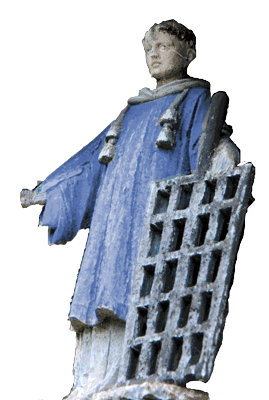
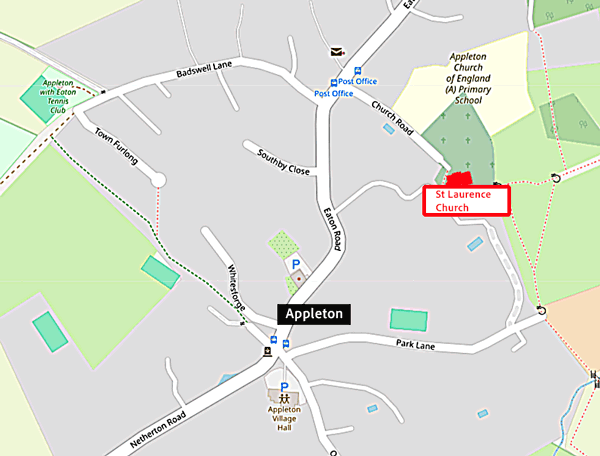
We are not always sure what taking up our cross might mean; and while it clearly doesn’t sound particularly pleasant, the actual nature of any suffering involved remains unclear. Not so for the first readers of the gospels, and for the communities of the first three centuries of the Church. For them, the danger of real persecution and death was all too real, as St Alban, Britain’s first martyr, discovered in about 250AD (today is his feast-day), and our own patron Saint Laurence in Rome in 258.
But after the move to legalise Christianity, beginning with the emperor Constantine in 313AD ? What about then? Some were so fearful that the loss of opportunities for martyrdom would rob Christianity of its heart that they rushed off to the desert to invent monasticism, living a life of ‘bloodless sacrifice’ through perpetual prayer and extreme acts of self-denial.
We 21st-century Britons find ourselves both without any real danger of martyrdom and without any obvious appetite for hair-shirts and flagellation. We tend to live out our faith in a gentler and more undemonstrative key, or so it feels in the confines of an idyllic rural parish on an idyllic summer’s day. Be that as it may, if we are to be truly members of Christ’s own flock, purchased with his precious blood, then we must make the topsy-turvy values of his Kingdom our own values, by putting the poor before the rich, welcoming the stranger as if they were Christ himself, and lifting up our eyes to far wider horizons than are peopled exclusively by (possibly disgruntled) family and friends.
It is hope in the final revealing of this Kingdom that should sustain us all our days. If we turn our back on it and concern ourselves with our own self-interest we will simply lose our lives, our very souls. But if we live a life that anticipates his Kingdom then, even though some may tell us that we are throwing everything away, we will in fact be living real lives, sharing in the divine love, and in the abundance that Christ came to bring.